Archive for the ‘research’ tag
Åland Islands: A Platform for Collaboration


The use of the station’s laboratory and microscopes enabled video and photo capture, as well as the creation of installation “Composition for Cyanobacteria” featured in an exhibition at Kulturvillan in Mariehamn.

Additionally, a video projection, supported by Östersjöfonden (The Baltic Sea Foundation), was showcased during the Baltic Sea Award ceremony, accompanied by music from Patrik Komorowski.


Kristin Bergaust • Fernanda Branco • Tamara Brito de Heer • Tony Cederberg • Kajsa Dahlberg • Amalia Fonfara • Cillia Hermann • Mikko Hyvönen • Inga Kuznecova • Kruno Jošt • Eeva Juutinen • Jessie Kleemann • Pipsa Lonka • Varste Mathæussen • Sara Rönnbäck • Katarina Skår Lisa • Daniel Slåttnes • Katja Syrjä • Carla Tapparo • Pella Thiel • Under Ytan • Sinna Virtanen • Silke Weißbach • Tery Žeželj.
This program is carried out through ISLAND CONNECT, a collaborative program between seven performing arts organizations, working with residencies located on (or associated with) European islands of different countries. All artists are critically engage with the themes of insularity, islander identities or island socio-political realities in a wider European context comparing the similarities and difficulties that emerge from diverse island regions of the project.
ConcertoQuieto at Riga Gallery, Novigrad
The research-art project “Concerto Quieto,” named after the Italian name for the Mirna River in Istria, is one of those increasingly present contemporary artistic practices that call for a transdisciplinary approach to the relationship between humans and the natural environment, where natural sciences are at a standstill, opening up new worlds and possibilities. Kruno Jošt, a multimedia artist who has been applying such a practice for years, deals with the interrelationships of science, art, and sustainable development on his permaculture estate near Lovinac in Lika.

One such approach is the form of a scientific laboratory through which Kruno Jošt explores how remediation of the river is created through the medium of sound, i.e., how microbes (non-humans) can help in the decomposition of the river’s toxic sediment without intrusive impact on the environment.

He applies a similar approach to the micro-location of the Mirna River’s flow and estuary. Its area abounds with rich flora and fauna and is an important location for the migration, overwintering, and nesting of water habitat birds. Regardless of the fact that the Mirna (still) is not a polluted river, due to erosion processes, wastewater from settlements, and artificial fertilizers, its natural biological and landscape diversity is endangered year after year.

For the needs of the exhibition in the Rigo Gallery, Kruno Jošt visits the Mirna River several times. In doing so, he collects water and sediment samples, stays alone with the river, listens to it, observes its flows, writes notes, and makes photo documentation. Jošt observes the micro-world from the collected samples of the Mirna River through a microscope. Based on the enlarged living “images” of microbes, he singles out those in which he finds abstract forms that he transfers to the medium of photography. In this way, he transforms the invisible world of microbes into visual forms that, with Jošt’s subsequent interventions, also gain a sound background – a composition for the micro-world of the Mirna River. Inspired by the findings from scientific research on sound frequencies that favor the numerical growth or reduction of individual microorganisms, Jošt creates a composition for the micro-world of the Mirna River.
“Island Connect” at Sardegna

During an artist-in-residency stay at Sardegna Teatro in Paulilatino, Sardinia, Italy, from May 6th to 17th, 2025, research was conducted to engage with the themes of insularity, islander identities, and island socio-political realities through a “more-than-human” lens.

Research was conducted at multiple locations on the coast and inland, seeking water and land connections and borders rich in life and events. Water samples were collected for subsequent microscopic imaging and the production of high-quality photography and video.
Some of the particularities found on the island included seaweed, commonly called “sea potato” – a seaweed resembling a ball of wool or pet hair, ranging in size from a bird’s egg to a large potato.

At the beach, a 3-meter-high seaweed “mountain” was decomposing, creating a rich environment for microbial life.

A livestock watering place full of algae, the Roman Baths of Fordongianus, and Salina Manna (the salt lakes) were all explored, and water with sediment was sampled. One channel video was created, and live music was performed at the Sardegna Teatro residency at the end of the stay.

This program is carried out through ISLAND CONNECT, a collaborative program between seven performing arts organizations, working with residencies located on (or associated with) European islands of different countries.
Playing for Microbes

During nonconsecutive three months artist in residency in Halland region of Sweden, a research was conducted around the problematic toxic sediment created by extensive industrial history of the Borås city on the Viskan river as a part of proposals for the theme of artistic “ecological literacy”.

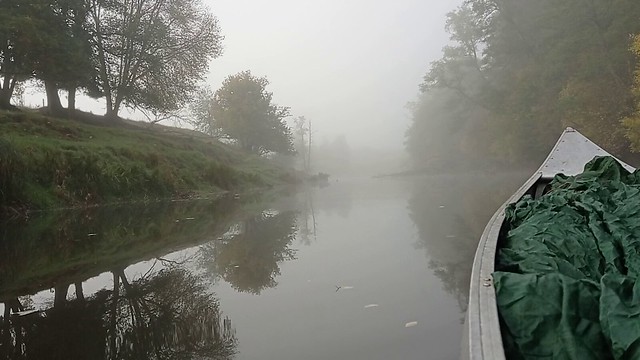
During residency, for the project purposes Viskan was visited on many occasion. Canoe travel was undertaken to collect samples of the river that were later used to examine microbiological life of the river.

As known from scientific research, some forms of toxicity can be remediated with microorganisms so this was taken as an inspiration to look into ways of enlarging their numbers and activity locally.

Microorganisms can be influenced trough certain sound frequencies in certain volumes that in some cases enlarges their number in shorter time, and without any unwanted effects to environment.

After conducting a research on sound frequencies and its influences on observed microorganisms in the collected samples some of them were designed for the informance (informative performance) on the river itself.

Canoe was arranged into a vessel that can take one participants on the river trip. This canoe had an installation for playing sounds beneficial for the bacteria, but was also tailored for each participant to get into a state of appreciation of the river. At the same time participants could release what is known as Miracle Enzyme, organic compound beneficial for the microorganisms that was created in a prior workshop. An intimate visual reference was tailored for each individual observance of Viskan river and its inhabitants, with accompanying sound and information about micro and macro cosmos.

Research and performative action were executed during Art Inside Out residency Between the Rains in region Halland, Sweden in 2022.

Whole photo-log can be seen below
Guidelines For Possible Futures VI

Guidelines for possible futures II

Centre for Creative Solutions Lika
Reclaim and Defend the ‘Old Territories’
Reclaiming and defending the ‘old territories’ for any meaningful and inhabitable future.
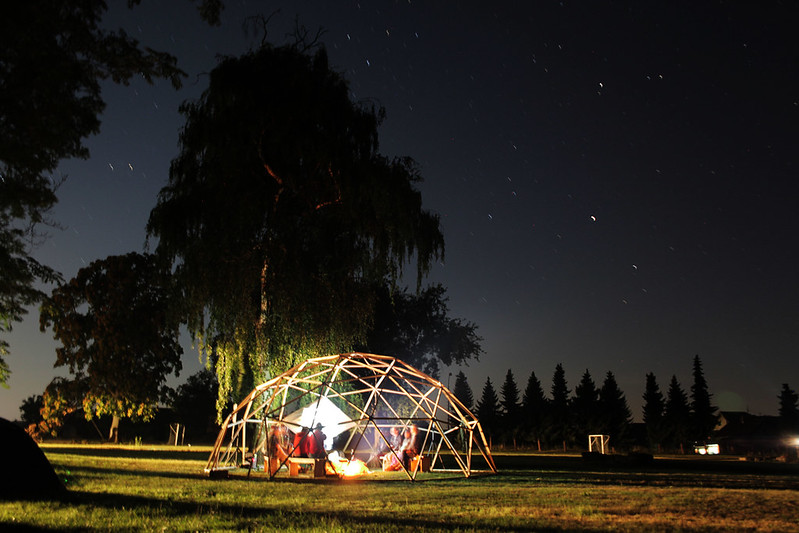
MMkamp brought more than 30 people together to investigate, reclaim, create TAZ, participate, learn, acknowledge and appreciate trough workshop and presentation.
Have a look at photolog.
ART01 Project in its 11th Month
ART01 is a project that examines art operating systems trough self reflection on artistic practices done in last 11 months – from September 2009 to July 2010. On 25th July ART01 has a public presentation in ContentArt gallery, Kreutzbergstr. Berlin. Please join for collaborative public event, spiced with pirate radio, on-line broadcast, social games, linux install party, exchange and swap, loop and feedback.
Diagrams are important part of ART01 project, have a look at gallery >>

Click to enlarge
Psychogeography in Linz


In order to create understanding and transformation of the world one must create adventures;
Terrain of the cityscape in relation to its emotive resistivity;
Ludic adventurism;
Off-limit areas;
Capture;
Explore;
Rethink;
Discover;
We are bored in the city, we really have to strain to still discover mysteries;
Slide show of the photo research in empty building in Linz, Dauphinestr. 9 >>
Psychogeography, a subfield of geography, was defined in 1955 by Guy Debord as “the study of the precise laws and specific effects of the geographical environment, consciously organized or not, on the emotions and behavior of individuals.”
Semantics and Free Web Poetry
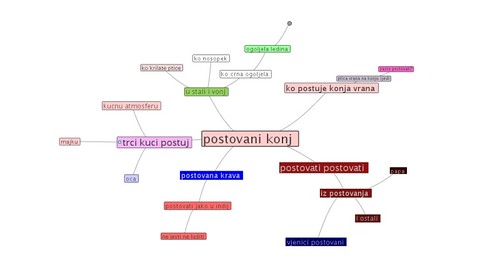
In the concept of Free Web Poetry ‘Free’ refers to freedom of expression (freedom for nonlinear expression and intuitive creation), ‘Web’ refers to online but also web-like structure, and ‘Poetry’ is from the Greek “ποίησις“, poiesis, a ‘making’ or ‘creating’.
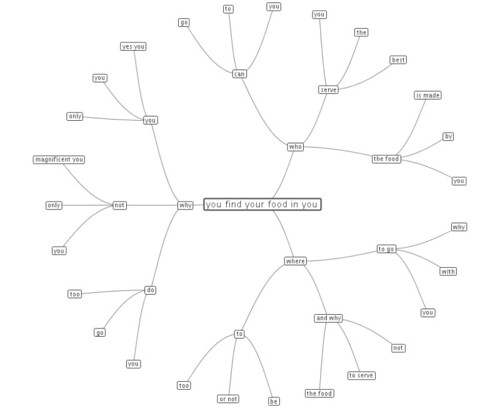
FWP could be intriguing for writers and artists who like to make complex nonlinear structures. I use it for making interactive cut-up / haiku poems – poems change as reader clicks on the nodes.
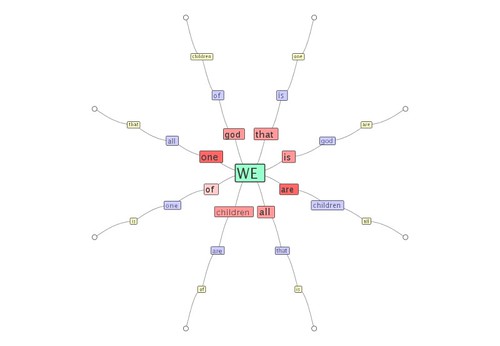
How to use: download and install xebece (software developed by Roman Kennke). Write a short sentence or a word in each node, make connection to next node and keep on writing. Play with the structure and new meaning will arise.
Download short video (5 Mb) in ogg theora codec of FWP ‘Poštovani konj’ (‘Respected Horse’).
A SKETCH for THE STUDY IN THE GENEALOGY OF SUBCULTURES
Download A SKETCH for THE STUDY IN THE GENEALOGY OF SUBCULTURES relative to the STRUGGLE BETWEEN HUMANS AND MACHINES and please contact me for further references or questions